Driving in Serbia Tips for Tourists | From €8/day | Car Hire Serbia
Introduction to Driving in Serbia
Driving through Serbia is one of the most rewarding ways to experience the country’s diverse landscapes, from the rolling plains of Vojvodina to the rugged gorges of the south. Whether you are tracing the Danube, exploring historic fortresses, or venturing into bustling cities like Belgrade and Novi Sad, having your own set of wheels grants you the ultimate freedom. However, navigating the Balkans requires a bit of local knowledge. From understanding local road rules to deciphering Cyrillic road signs, this comprehensive guide will ensure your Serbian road trip is smooth, safe, and entirely stress-free. When you arrange your car rental for Serbia, look for providers that offer no hidden fees and free cancellation, so you can plan your adventure with complete peace of mind.
Road Rules and Speed Limits
Serbia drives on the right-hand side of the road, and the driving style can be described as moderately assertive. While major highways are in excellent condition, rural roads can be narrow and winding. It is crucial to familiarize yourself with the speed limits, which are strictly enforced by speed cameras and highway patrols. The general speed limits are as follows:
- 50 km/h in built-up urban areas, towns, and villages.
- 80 km/h on open roads and rural routes outside of built-up areas.
- 120 km/h on motorways (auto-putevi).
Keep in mind that speed limits may be lowered in designated zones, particularly near schools or construction areas. The legal blood alcohol concentration limit is 0.03%, which is significantly lower than in many Western European countries—our best advice is to avoid alcohol entirely if you plan to drive. Seatbelts are mandatory for all passengers, and children under 12 must be seated in appropriate child restraints. It is also a legal requirement to keep your headlights on at all times, even during the brightest summer days. Additionally, you must carry a reflective vest, warning triangle, and a first-aid kit in your vehicle at all times.
International Driving Permit Requirements
If you are planning to rent a vehicle and drive in Serbia, understanding the documentation required is essential. Tourists holding a valid domestic driver’s license from the European Union, the United Kingdom, Australia, the United States, or Canada can generally drive in Serbia for up to six months without a separate International Driving Permit (IDP), provided their license uses the Latin alphabet. However, if your domestic license is printed in a non-Latin script (such as Arabic, Chinese, or Cyrillic), you are legally required to carry an IDP alongside your original license. Even if your license is in English, obtaining an IDP before your trip is highly recommended. It acts as an officially recognized translation and can save you considerable time and hassle when dealing with local authorities or car rental for Serbia agencies. Always carry your passport as well, as police checkpoints occasionally require identification verification.
Toll Roads and Vignettes
Serbia’s major highway network, connecting key cities like Subotica, Novi Sad, Belgrade, and Niš, operates on a toll system. Unlike some neighboring countries that use a universal vignette (sticker) system, Serbian motorways utilize electronic or physical toll booths. You pay based on the distance traveled between the entry and exit gates. Tolls can be paid in cash (Serbian Dinars or Euros, though change is usually given in Dinars) or by credit/debit card. For frequent travelers, the ENP (Electronic Toll Collection) tag is available and can be linked to your rental car upon request, allowing you to bypass the queues at the toll booths. While there is no countrywide vignette required, always confirm with your car rental for Serbia provider whether the ENP device is included in your rental agreement or if you are expected to pay tolls out of pocket.
Parking in Belgrade and Novi Sad
Finding a parking spot in Serbia’s major cities can be challenging, but understanding the zoning system makes it much easier. Both Belgrade and Novi Sad divide their central parking areas into color-coded zones: Red, Yellow, and Green. Red zones allow a maximum stay of 60 minutes, Yellow zones up to 120 minutes, and Green zones up to 180 minutes. In the city centers, parking is enforced on weekdays, and payment can be made via SMS using a local SIM card, at parking kiosks, or through dedicated mobile apps. Simply send an SMS with your vehicle’s license plate number to the designated shortcode for your zone, and you will receive a confirmation message before your time expires reminding you to move or pay again.
For longer explorations, it is highly recommended to use public parking garages (garaza) or park and ride facilities, as street parking is time-restricted and aggressively monitored by parking wardens. Fines for overstaying your welcome are common and must be paid promptly. Many garages in Belgrade’s center, such as those near Kalemegdan or Republic Square, offer daily rates that are very reasonable compared to the hourly fines for overstaying on the street.
Fuel Stations and Payment Methods
Fueling up in Serbia is straightforward, with a healthy mix of modern highway rest stops and smaller village stations. Common fuel types include Benzil (Petrol/Gasoline, typically 95 and 100 octane) and Dizel (Diesel). If you are renting an electric vehicle, charging stations are becoming more prevalent in urban centers and along major routes, though they remain sparse in rural areas. Major international brands like Shell and OMV are prevalent, alongside domestic giants such as NIS (Petrol) and Gazprom. Payment is flexible; most stations accept major credit and debit cards (Visa, Mastercard), but it is always wise to carry some Serbian Dinars (RSD) in cash, especially when venturing off the beaten path where smaller, rural stations may only accept cash. Operating hours vary—highway stations are typically 24/7, while village stations may close on Sundays or keep shorter hours.
Navigating Road Signs in Cyrillic
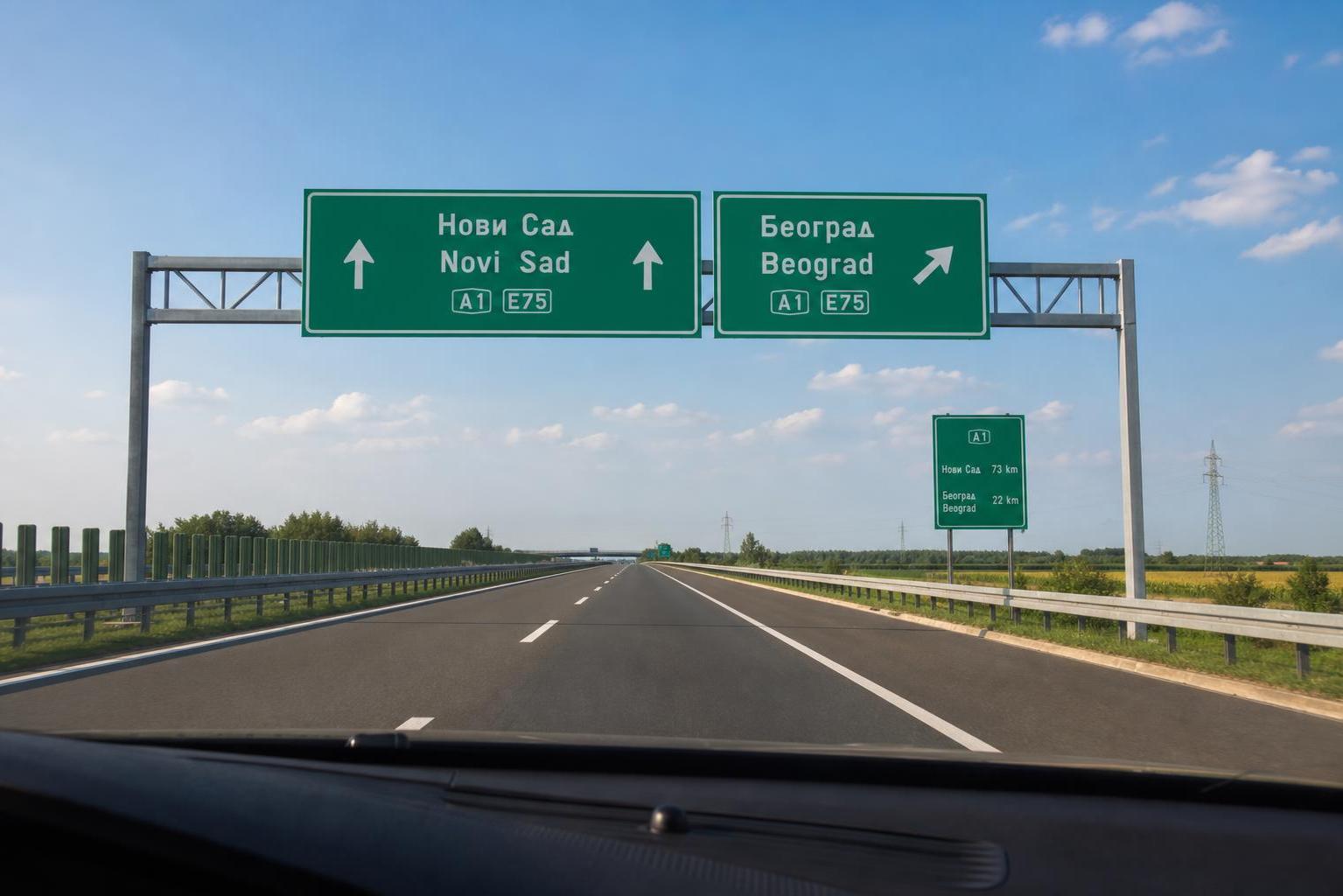
One of the most unique aspects of driving in Serbia is the dual-alphabet signage. Standard directional and warning signs (like stop, yield, speed limits, and no entry) follow standard European conventions and are instantly recognizable. However, city names and directional text are almost exclusively written in the Cyrillic alphabet. For example, Belgrade will appear as Београд, Novi Sad as Нови Сад, and Niš as Ниш. While modern GPS and navigation apps will guide you smoothly, it is incredibly helpful to familiarize yourself with the Cyrillic equivalents of your destinations before setting off. This way, if your GPS signal drops, you can still confidently read the highway exit signs and city limit markers. On major international routes, you will occasionally find supplementary signs in the Latin alphabet, but relying on this is a risky game.
Border Crossings
Serbia’s central Balkan location makes it a fantastic hub for road trips, with numerous international border crossings. When crossing into neighboring countries, ensure you have your passport, rental agreement, and any necessary visas ready.
- Croatia: Crossings at Šid/Batrovci or Bajakovo are the primary routes to Central and Western Europe. These can get extremely congested during the summer holiday season, so travel early in the morning.
- Hungary: The Horgoš crossing on the A1 motorway is the fastest route to Budapest. Röszke is another major point, equally busy during peak times.
- Bosnia and Herzegovina: Crossings like Šepak and Sremska Rača are common. Be prepared for slightly slower processing as border infrastructure is smaller.
- Montenegro: The scenic route via Gostun or the main crossing at Dobrakovo leads into the breathtaking mountains of Montenegro. Expect slow-moving traffic in the summer.
- Bulgaria: The Vrška Čuka and Stara Podvrška crossings in the east are the main gateways, serving travelers heading toward Sofia or the Black Sea.
- North Macedonia: The Preševo crossing is the primary southern gateway. Traffic flows relatively smoothly here outside of the peak summer months.
A vital tip for driving in the region: if you are planning to visit Montenegro or Bosnia, you will be entering countries outside the EU. Most car rental for Serbia providers require you to declare your cross-border intentions in advance and may charge an additional insurance premium for leaving Serbia. Always verify your rental terms to avoid denied insurance coverage or hefty fines at the border.
Winter Driving
Serbia experiences cold, snowy winters, particularly in the mountainous regions of Zlatibor, Kopaonik, and the valleys of Southern Serbia. From November 1st to April 1st, it is mandatory for vehicles to be equipped with winter tires, and this law is strictly enforced. When arranging your car rental for Serbia during the winter months, ensure the agency provides winter tires—some include them for free, while others charge a daily fee. Snow chains are highly recommended if you plan to drive into the mountains and are sometimes required by local police during heavy snowfall. Always check the weather forecast before embarking on long journeys, as black ice is common on rural roads early in the morning. Drive slowly, keep a safe distance from the vehicle ahead, and remember that bridges and overpasses freeze before the rest of the road.
What to Do in an Accident
In the unfortunate event of an accident, staying calm and following protocol is essential. If there are injuries, immediately dial 112 (the European emergency number) or 192 for the police. For roadside assistance, dial 1987. Even in the case of a minor fender-bender with no injuries, you must not move the vehicles until the police arrive and file an official accident report. This report is strictly required by your car rental for Serbia agency and their insurance partners; without it, your coverage may be voided. Turn on your hazard lights, put on your reflective vest before exiting the vehicle, and set up your warning triangle at least 30 meters behind the car. Exchange contact and insurance details with the other driver, take extensive photos of the scene, and contact your rental provider as soon as possible to inform them of the incident.
Related Destinations
Ready to hit the open road? Start your Balkan journey right by picking up your vehicle in one of Serbia’s vibrant cities. We offer reliable car rental for Serbia with no hidden fees and free cancellation, ensuring your travel plans stay flexible and affordable. Explore our guides and booking options for these top destinations:
- Belgrade – Start in the dynamic capital and explore its historic fortresses and bustling nightlife.
- Novi Sad – The “Athens of Serbia,” perfect for a scenic drive through the Fruska Gora wine region.
Ready to book? Visit our homepage for the best hire car deals.