Driving in Serbia — Complete Guide 2026
Is Driving in Serbia Worth It?
Absolutely. Serbia might not be the first country that comes to mind for a European road trip, but that’s exactly why it’s such a gem. The roads have improved massively over the past few years, the scenery ranges from lush wine valleys to dramatic mountain passes, and there’s something genuinely special about exploring this part of the Balkans at your own pace.
Sure, you could rely on buses and trains, but they won’t take you to that hidden monastery, that family-run winery, or that perfect swimming spot by the river. Having your own wheels transforms a good trip into a great one.
Road Conditions in Serbia (2026 Update)
The good news: Serbia’s roads have come a long way. The main highways — particularly the A1 corridor running from Belgrade through Nis to the border with North Macedonia — are in excellent condition. The Belgrade-Novi Sad motorway is smooth and modern, making that day trip a breeze.
Regional roads vary. The main routes connecting cities are generally fine, but country roads can be narrower, with occasional potholes and unpredictable surfaces. In rural areas, expect some gravel sections and roads that haven’t seen a fresh coat of tarmac in years. Drive to the conditions, take it slow on unfamiliar roads, and you’ll be fine.
Mountain Roads
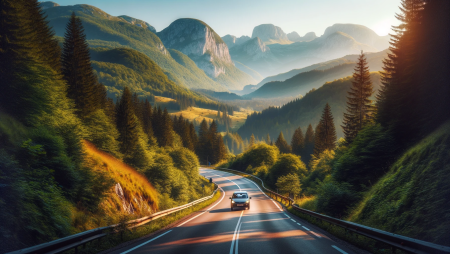
If you’re heading to Kopaonik, the Fruška Gora wine region, or anywhere mountainous, be prepared for winding roads. These can be narrow with steep drop-offs, so take your time. In winter (roughly November to March), many mountain routes require winter tyres or even chains. Check conditions before you set out — the AA Serbia website and local news provide up-to-date information.
Speed Limits and Rules
Serbia uses the standard European speed limit system:
- Towns and cities: 60 km/h
- Open roads: 80 km/h
- Motorways: 130 km/h
- Motorways with variable limits: Watch the electronic signs — these can change based on traffic and weather
Speed limits are enforced, and fines can be steep. Police checkpoints are common, especially on major routes. Don’t treat the limits as suggestions — the penalties are real and can put a damper on your trip.
Tolls in Serbia
Serbia has an extensive toll road network, and yes, you’ll need to pay to use the motorways. The good news? Tolls are surprisingly reasonable compared to Western Europe.
You can pay in two ways:
- Cash or card at toll booths — Accepts euros, Serbian dinars, and major credit cards
- ATAL (e-tag) — A prepaid device for automatic toll payment. Available at border crossings and larger service stations. Saves time if you’re doing lots of motorway driving
Typical toll costs: Belgrade to Novi Sad is around 400-500 RSD (about €4), Belgrade to Nis is roughly 1,200-1,500 RSD (around €12-13). Prices increase slightly each year with inflation.
Required Documents
When driving in Serbia, you need to carry:
- Valid driving licence — Must be held for at least one year
- Vehicle registration documents — If you’re renting a car, this will be provided
- Insurance documents — Third-party liability is mandatory
- Passport or ID card
If you’re bringing your own vehicle from abroad, ensure you have a Green Card (international insurance certificate) — it’s not legally required but highly recommended and often mandatory for bordering countries.
Border Crossings
Serbia shares borders with eight countries. Here are the main crossing points you’ll likely use:
Coming from Hungary
The main crossing is at Horgoš (near Subotica). Generally smooth, though wait times can build up in summer and around holidays. Have your passport ready.
Going to/from Croatia
The Batrovci crossing (toward Slavonski Brod) is the main route. EU citizens can cross using just an ID card. Non-EU visitors need passports.
Bulgaria
Cross at Gradina (near Negotin) for the southern route into Bulgaria. This crossing has improved significantly in recent years.
North Macedonia
The Presevo crossing is the main route south toward Skopje. Straightforward and usually quick.
Montenegro
Heading to the coast? The main crossing is at Dobrakovo. The road through the mountains is stunning but can be challenging — take your time.
Bosnia and Herzegovina
Multiple crossings depending on your route. The one near Sremska Raca (on the Belgrade-Sarajevo route) is popular. Note: You’ll need separate insurance for Bosnia, available at the border.
Fuel and Petrol Stations
Petrol stations are easy to find along major routes. The big chains are NIS (Naftna Industrija Srbije), Gazprom (yes, really), and Euro Petroleum. Most stations are self-service.
Fuel types:
- Benzin (Petrol): MB 95 (equivalent to unleaded 95) and MB 98 (premium)
- Dizel (Diesel): Widely available
- LPG: Available at many stations if your car takes it
Prices fluctuate but are generally cheaper than in Western Europe. As of early 2026, petrol is around 180-190 RSD per litre, diesel slightly less.
Parking Tips
Parking in Belgrade can be a nightmare — the city centre fills up quickly and traffic is genuinely chaotic. Use Park+ apps or look for secure garage parking rather than risking street parking in unfamiliar areas.
Smaller cities like Novi Sad and Nis are much easier. Street parking is available, often with machines ( ticketlook for the blue zones). Parking charges apply on weekdays during business hours but are usually free evenings and weekends.
If you break down or have an accident: For minor accidents, exchange details with the other driver and take photos. The police may or may not attend depending on the severity. Driving in Serbia is entirely manageable and genuinely rewarding. The roads are better than they used to be, tolls are reasonable, and the freedom to explore at your own pace makes all the difference. Just stay alert, be patient with the occasional chaotic traffic in cities, and don’t skip the winter tyres if you’re heading to the mountains between November and March. Ready to hit the road? Compare car hire prices across Serbia and find the best deal for your trip.
Final Thoughts
Related Serbia Car Hire Guides