Serbia in Spring: The Ultimate Road Trip Guide
Serbia in Spring: The Ultimate Road Trip Guide
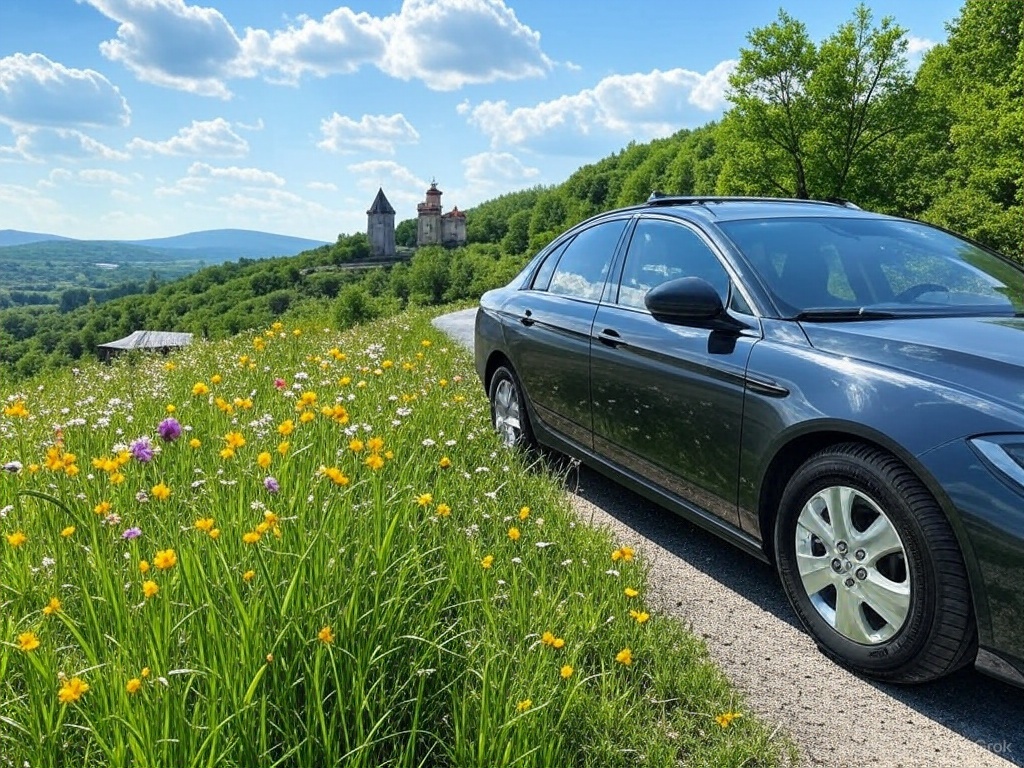
Spring might be the best time to explore Serbia by car. The countryside comes alive — think wildflowers carpeting Fruška Gora, the Danube sparkling under longer days, and temperatures that sit in that sweet spot between jumper weather and full summer heat. You’ve got the roads mostly to yourself, too. Tourists haven’t arrived in force yet, and locals are still shaking off winter.
What follows is a practical guide to three road trip routes that take you through the best of springtime Serbia. Drive one, drive all three, or mix and match — they’re designed to work as standalone day trips or connected into a longer itinerary.
Why Spring Is Perfect for Driving Serbia
Before we get into the routes, a word on timing. April through May is ideal. March can still surprise you with cold snaps, especially in the north and at elevation. June is lovely but getting busier. May hits the sweet spot: warm days (15-22°C), cool nights, and everything in bloom.
The other advantage? Prices. Car hire rates are lower than summer. Hotels in Novi Sad, Niš, and smaller towns are cheaper and have availability. And you’re not competing with festival crowds — EXIT doesn’t hit Novi Sad until July.
Driving conditions — Spring roads in Serbia are generally good. The main routes (A1 motorway, regional roads between major cities) are well-maintained. Rural roads into national parks can be narrower and windier, but nothing a competent driver can’t handle. Watch for occasional potholes on secondary roads — winter takes its toll.
Route 1: Belgrade to Novi Sad — The Vojvodina Day Trip
Distance: 90km each way Driving time: 1 hour (direct) or 2-3 hours (via Fruška Gora) Best for: Wine tasting, monastery visits, Danube views
This is the classic day trip from Belgrade, and it’s worth every kilometre. You can blast straight up the A1 motorway and be in Novi Sad in an hour, but that misses everything interesting along the way.
The Scenic Route via Fruška Gora
Leave Belgrade heading north on the A1, but instead of staying on the motorway all the way to Novi Sad, take the exit for Stari Slankamen. This detours you along the Danube, through small villages, and into Fruška Gora National Park.
Stari Slankamen — A riverside town with thermal springs and decent fish restaurants. Worth a quick stop for coffee and Danube views. The town has one of those odd historical footnotes: it was the site of two significant battles, one in 1692 and another in 1914.
Sremski Karlovci — Fifteen minutes from Stari Slankamen, this tiny wine town is the highlight. Baroque buildings, Orthodox churches, and wine tasting rooms everywhere. The town was historically the seat of the Serbian Orthodox Church under Habsburg rule, so it punches above its weight architecturally. Stop at one of the wine cellars — Živanović is a reliable choice — and try Bermet, the local dessert wine that supposedly travelled on the Titanic.
Fruška Gora Monasteries — From Sremski Karlovci, drive into the national park proper. There are seventeen Orthodox monasteries scattered across the mountain. You won’t see them all, so pick two or three. Krušedol is the most famous, with 16th-century frescoes. Grgeteg sits in a quiet valley. Velika Remeta has a particularly tall bell tower. Allow 30-45 minutes per monastery if you’re touring interiors.
Novi Sad Itself
After Fruška Gora, descend into Novi Sad. The city deserves at least a few hours.
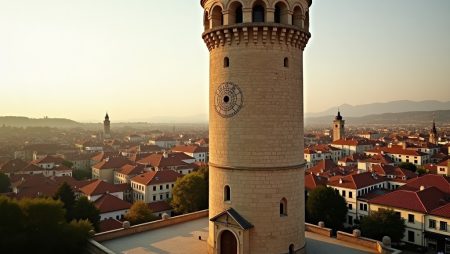
Petrovaradin Fortress — Across the Danube from the city centre. The clock tower is famous for its reversed hands (small hand shows minutes, large hand shows hours — so fishermen on the river could see the time from far away). Climb the walls for views across the whole region.
Liberty Square and the Old Town — Walkable, pedestrianised, full of cafes. The Name of Mary Church dominates the square. The Catholic church across from it gives the square a dual-religion feel typical of Vojvodina.
Return to Belgrade — Either retrace your route (with different monastery stops if you want) or take the direct A1 motorway back. An hour door to door.
Route 2: Eastern Serbia — Đerdap Gorge and the Iron Gates
Distance: 250-300km round trip from Belgrade Driving time: 5-7 hours including stops Best for: Dramatic landscapes, medieval history, archaeological sites
This route takes you east to the Romanian border and one of Europe’s most spectacular river gorges. It’s a long day from Belgrade — consider staying overnight in Donji Milanovac or Kladovo — or start from Novi Sad if you’re already in Vojvodina.
Belgrade to Smederevo
Start early. Take the A1 east toward Smederevo (about 60km from Belgrade). This medieval fortress town sits where the Danube meets the Jezava River.
Smederevo Fortress — One of the largest medieval fortresses in Europe. Built in the 15th century as the capital of Serbian Despotate. Massive walls, river on three sides, thoroughly impressive. You can walk the walls and explore inside. Allow an hour.
Smederevo to Đerdap Gorge
From Smederevo, continue east on Route 34. The road follows the Danube, passing through small towns and vineyards before reaching the gorge proper.
Đerdap Gorge (Iron Gates) — The Danube narrows dramatically here, cutting through the Carpathian Mountains. The gorge stretches for about 100km, with the river reaching depths of 90 metres. It’s genuinely spectacular. The Romanian side is visible across the water — at some points, you’re only a few hundred metres from the border.
Lepenski Vir — An archaeological site dating back 8,000 years. One of Europe’s oldest settlements, with unique fish-shaped sculptures and arranged burial grounds. The museum is small but well-curated. Worth 45 minutes.
Golubac Fortress — A medieval fortress right on the river, with nine towers and sections built into the cliff. You can see it from the road, but it’s worth stopping to explore. The setting is dramatic — the Danube widens here, and the fortress commands the view.
Donji Milanovac — A small town on the river, good for lunch or an overnight stop. Several restaurants with river views.
Return Route
You can return the same way or take the inland route through Negotin and Bor. The inland route is faster but less scenic. If you have time, stick to the riverside road.
Route 3: Southern Serbia Circuit — History and Devil’s Town
Distance: 500-600km round trip from Belgrade Driving time: 6-8 hours driving time (2-3 days recommended) Best for: History buffs, wine lovers, off-the-beaten-track exploration
This route heads south from Belgrade through Serbia’s heartland, hitting Topola, Niš, and one of Serbia’s strangest natural formations.
Belgrade to Topola
Route 23 south from Belgrade. About 80km to Topola, in the Šumadija wine region.
Topola and Oplenac — The Karadjordjević royal family’s home territory. The St. George Church at Oplenac is stunning — mosaics cover every surface, made from millions of tiny tiles. The crypt contains the tombs of the royal family. The hilltop views over vineyards are excellent.
Wine tasting — Topola is surrounded by vineyards. Several wineries offer tastings. Aleksandrović is one of the best-known, producing high-quality Serbian wines. Book ahead for tours.
Topola to Niš
Continue south on Route 23 / A1. About 200km from Topola to Niš, passing through agricultural heartland.
Niš — Serbia’s third-largest city and one of the oldest in the Balkans. Constantine the Great was born here.
Niš Fortress — An Ottoman-era fortress, now a park with cafes and open-air events. Free to enter, walkable in an hour.
Skull Tower (Ćele Kula) — A macabre monument built by Ottomans using the skulls of Serbian rebels after a failed uprising in 1809. Unsettling but historically significant.
Niš concentration camp — One of the few preserved Nazi camps in Europe. A sobering but important stop.
Niš to Devil’s Town
From Niš, head southeast toward the Bulgarian border, then turn off toward Đavolja Varoš (Devil’s Town).
Devil’s Town (Đavolja Varoš) — A collection of about 200 strange earth pillars, shaped by erosion into odd formations. Local legend says they’re wedding guests turned to stone. The site is genuinely eerie, especially in the late afternoon when shadows lengthen. Allow two hours for the walk through the formations.
Getting there — The final stretch is on a narrow mountain road. It’s paved but winding. Take your time.
Return via Kopaonik
Instead of returning directly to Niš, take the route through Kopaonik National Park. The mountain is a ski resort in winter, but in spring it’s wildflower-covered meadows and hiking trails. The road up is steep but scenic.
From Kopaonik, descend to the Ibar Valley and follow Route 23 back to Belgrade. The Ibar Valley route passes through spectacular gorge scenery and several monasteries.
Practical Tips for Spring Driving in Serbia
Fuel — Petrol stations are frequent on main routes. NIS and Gazprom are the main chains. Expect around €1.50-1.60 per litre. Pay in dinar (cash) or card.
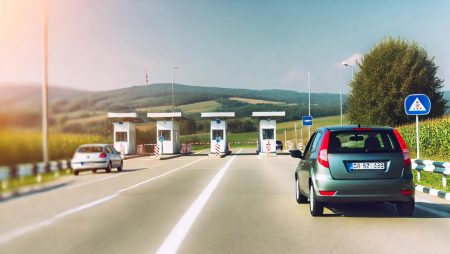
Tolls — The A1 motorway has several toll sections. Belgrade-Novi Sad is around €2. Belgrade-Niš is around €7-8. Keep some dinar handy for the toll booths.
Documents — Passport, driving licence, and rental agreement. EU/EEA licences are accepted. International Driving Permit recommended for non-European licences.
Weather — Spring can be unpredictable. April can see rain and temperatures from 10-20°C. May is more settled. Pack layers. Check forecasts before heading into the mountains.
Language — English is widely spoken in Belgrade, Novi Sad, and tourist areas. In smaller towns, some Serbian helps. Download an offline translation app.
Car choice — For these routes, a standard saloon is fine. If you’re exploring deeper into national parks or heading into the Tara-Šargan region, consider something with higher clearance.
Sample Itinerary: 5-Day Spring Road Trip
Day 1: Belgrade to Novi Sad via Fruška Gora. Overnight in Novi Sad. Day 2: Novi Sad to Sremski Karlovci, explore monasteries, return to Belgrade or continue east. Day 3: Belgrade to Đerdap Gorge (via Smederevo). Overnight in Donji Milanovac. Day 4: Continue through Đerdap, then drive south to Niš. Overnight in Niš. Day 5: Devil’s Town in the morning, return to Belgrade via Kopaonik (or directly).
Adjust based on your interests and available time. Each route works as a standalone day trip from Belgrade.
Book Your Serbia Car Hire
Spring rates are lower than summer, and availability is better. Compare prices from our Vipcars partners below — no hidden fees, free cancellation up to 48 hours before pickup.
Frequently Asked Questions
Is it safe to drive in Serbia?
Yes. Main roads are well-maintained, and Serbian drivers are no worse than elsewhere in Europe. The usual precautions apply: watch for potholes on secondary roads, don’t drive tired, and keep valuables hidden.
Do I need an International Driving Permit?
EU/EEA licences are accepted. If yours is from outside Europe, an IDP is recommended. Some rental companies require it.
Can I drive into neighbouring countries?
Most rental companies allow cross-border travel, but you need to declare it when booking. Expect a small surcharge. Check which countries are covered — Bosnia and Montenegro are usually fine; Croatia and Hungary require specific permissions.
What’s the speed limit in Serbia?
60km/h in towns, 80km/h on open roads, 120km/h on motorways. Speed cameras are common on main routes. Fines are issued on the spot.
Are roads open in spring?
All main routes are open year-round. Minor roads into higher elevations (like Kopaonik) may have late snow in March or early April — check conditions before setting off.
Related Guides
- Car Hire Belgrade — Start your road trip from the capital
- Car Hire Novi Sad — Explore Vojvodina
- Car Rental Niš Airport — Fly into Niš and start from there
- Driving in Serbia Guide — Everything you need to know about Serbian roads
- Day Trips from Belgrade — More ideas from the capital